As a seasoned survivor navigating the harsh realities of Arrakis in Dune: Awakening, I can confirm that life here is a constant struggle against the elements, the local fauna, and even other players. But one of the most persistent and universal challenges isn't a sandworm or a rival faction—it's the Imperial tax collector. Yes, even in the vast, unforgiving deserts, the long arm of the Imperium reaches out, demanding its due. Since establishing my own sub-fief beyond the relative safety of the tutorial zones, understanding and managing my tax obligations has become as crucial as managing my water supply. The system, while initially daunting, is a core part of the game's survival and progression mechanics, and mastering it is key to thriving on this desert world.

🏜️ How the Taxation System Works
The moment you cross the Vermillius Gap and stake your claim on a piece of Arrakis, you enter the Imperial economic system. Taxes are levied directly on your advanced sub-fief. It's important to note that if you're still operating from a basic console within the protected South Hagga Basin—the game's introductory area—you are exempt from these demands. However, the limitations of a basic console are severe, restricting your growth and access to higher-tier resources.
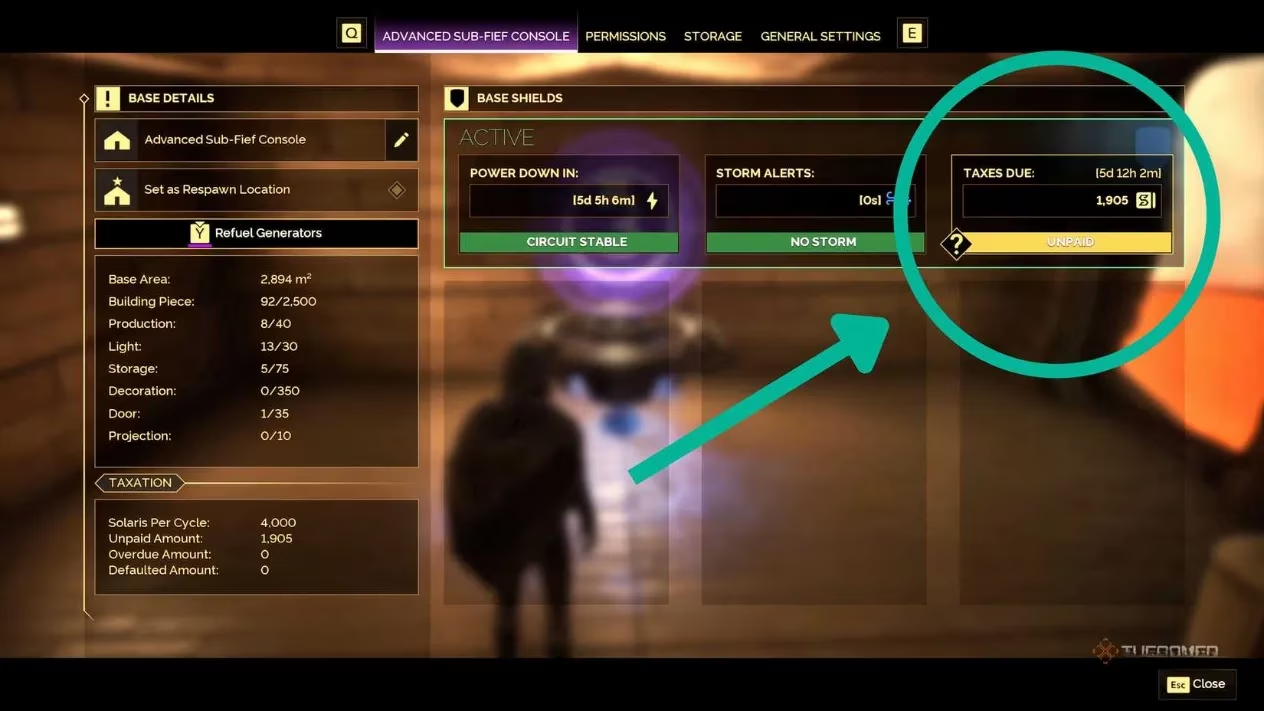
Once you've expanded, the tax bill arrives. The exact amount of Solari you owe is not a fixed sum. Instead, it's a dynamic calculation based on two primary factors:
-
The size of your land claim. A larger territory means a higher base tax.
-
The value of resources you cultivate. This is the big one. Harvesting precious resources, especially the legendary Melange (spice), will significantly increase your tax burden.
The principle is simple: The more prosperous and expansive your operations become, the more the Imperium expects in return. It's a balancing act between rapid expansion and financial sustainability.
✈️ The Journey to Pay Your Dues
Knowing your debt is only half the battle; you must physically deliver the payment. Taxes cannot be paid remotely from the comfort of your sietch. You must travel to an official Imperial settlement to settle your account. As of 2026, there are two such locations where this is possible:
-
Arrakeen, the planet's capital city.
-
Harko Village, a smaller but still crucial settlement.
Both house an Imperial Consulate, the only place where you can interact with an Imperial Representative to pay your taxes. Getting there requires air travel. While some veteran players and wealthy guilds maintain private Ornithopters, for most of us, especially in the early and mid-game, hiring a pilot is the standard procedure.
Here's the typical process:
-
Gather the required Solari from your operations.
-
Travel to a major tradepost, such as The Anvil or Griffin's Reach.
-
Locate and speak to the Ornithopter pilot NPC inside.
-
Select your destination (Arrakeen or Harko Village) and pay the transport fee.
The flight itself is a spectacle, offering breathtaking views of the desert landscape—a small reward for the administrative chore ahead.
📍 Finding the Tax Office
Once you disembark at your chosen settlement, you'll need to navigate to the Consulate. Don't worry, they aren't hidden. You can find them on your local map:
| Settlement | Imperial Consulate Location |
|---|---|
| Arrakeen | Located in the top left-hand corner of the map, inside a distinctive diagonal hall structure. |
| Harko Village | Found on the right-hand side of the map, also housed within a diagonal hall. |
Head inside, approach the main desk, and speak to the Imperial Representative. The interaction menu will clearly show the amount owed, and with a confirmation, your tax burden for that period is cleared. It's a surprisingly straightforward transaction once you make the journey.
⚠️ The Cost of Non-Payment: Sardaukar and Storms
Now, let's talk about consequences. The game presents tax evasion as a dire crime, and for good reason. Taxes are due approximately every two weeks (in-game time), but the system does offer a grace period. You have an extended past-due deadline to get your affairs in order before the real punishment begins.
If you ignore your obligations beyond this final warning, the Imperium's response is swift and brutal. You will face the wrath of the Sardaukar. The Emperor's elite shock troops are not to be trifled with; they will be dispatched to your location, turning your base into a warzone.
But the Sardaukar are only part of the problem. The Imperial bureaucracy has a more insidious penalty:
-
Your base's defensive shields will be permanently deactivated.
-
You will lose ownership and access to everything stored inside your structures.
-
Most critically, without shields, your sub-fief is left completely exposed to the environmental fury of Arrakis.
The relentless sandstorms will slowly, inevitably, chip away at your buildings until your once-proud outpost is reduced to rubble, reclaimed by the desert. It's a total loss scenario.

💡 Final Thoughts and Strategies
In my experience, the tax system in Dune: Awakening is more forgiving than the ominous in-game dialogue suggests. The extended deadlines give you ample time to harvest spice, complete contracts, or trade for the necessary Solari. It's designed to be a manageable, recurring challenge rather than an unfair penalty.
Pro-Tips for Managing Your Taxes:
-
Plan Your Expansion: Don't claim more land than you can afford to maintain. Grow your operation gradually.
-
Budget for Spice: Remember that spice operations, while highly profitable, come with a significant tax overhead. Factor that into your earnings.
-
Use the Grace Period: The past-due deadline is your friend. Use it if you're caught short after a major investment or an unfortunate raid.
-
Make it a Routine: Schedule regular supply runs to Arrakeen or Harko. Combine tax payments with trading, quest turn-ins, and social visits to make the trip efficient.
Paying taxes is a fundamental rite of passage on Arrakis. It signifies your transition from a mere survivor to a legitimate power—however small—within the Imperium's domain. It's a hassle, certainly, but one that comes with the territory, literally and figuratively. Manage it well, and your sub-fief will stand as a testament to your resilience. Ignore it, and the desert, aided by the Sardaukar, will ensure you are forgotten.