As a professional gamer who has navigated countless virtual worlds, I find myself constantly searching for that unique blend of challenge, atmosphere, and innovation that truly captures my imagination. In the ever-evolving landscape of survival MMOs, one title has recently clawed its way to the top of my must-play list: Dune: Awakening. Now, you might be thinking, "Another survival game? What's so special about this one?" Well, let me tell you, it's not just about building shelters and gathering resources—it's about surviving in a universe that feels both terrifyingly vast and intimately punishing. And here's the kicker: if you're one of those players who found a strange, meditative joy in lugging packages across a post-apocalyptic America in Death Stranding, then Dune: Awakening might just be your next obsession. Seriously, the parallels are so uncanny that I sometimes wonder if Hideo Kojima and the folks at Funcom had a secret meeting in a desert somewhere.
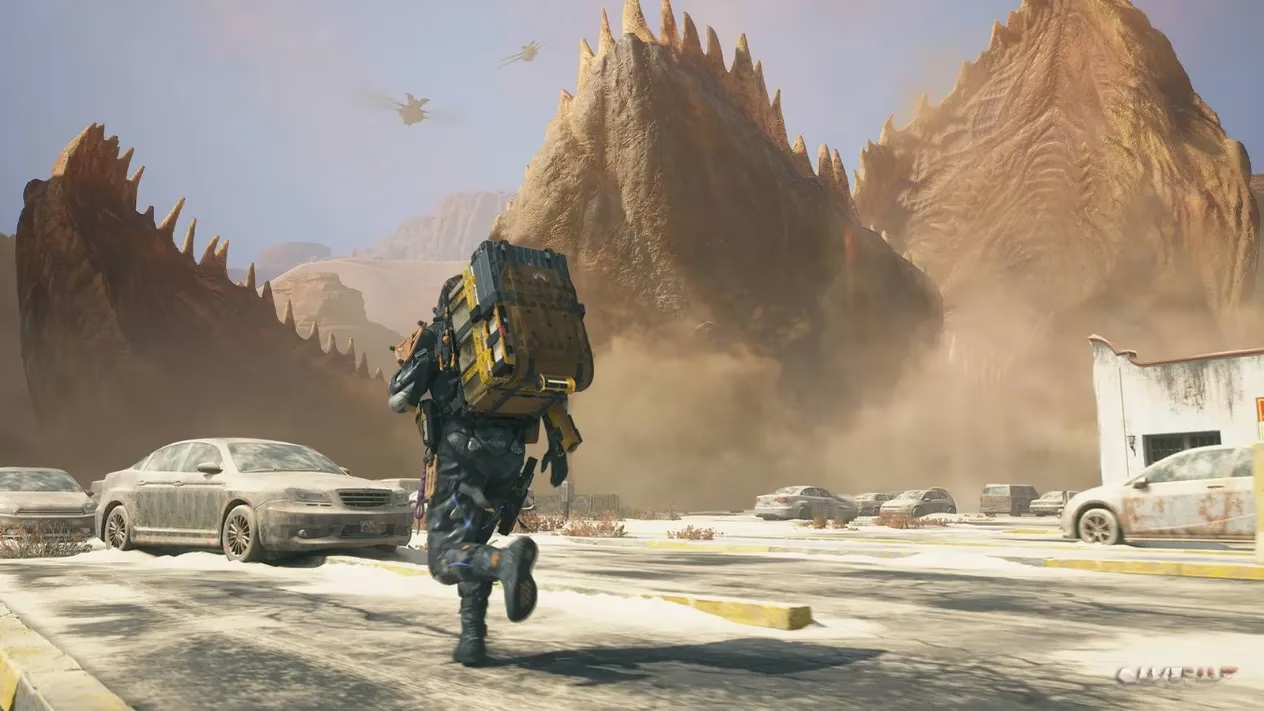
The Relentless Journey: Movement as a Core Philosophy
Let's start with the most obvious similarity: both games are fundamentally about the journey, not the destination. In Dune: Awakening, you're constantly on the move. The game doesn't just encourage exploration—it demands it. Whether you're relocating your base to avoid a sandworm's feeding ground or trekking across endless dunes to reach a distant objective, standing still is a luxury you simply can't afford. Your hydration levels drop faster than my motivation to do laundry, and if you don't keep moving toward water or shelter, you'll end up as a desiccated corpse buried in the sand. It's a constant, low-grade anxiety that keeps you engaged in a way that traditional survival games often fail to achieve.
Similarly, Death Stranding built its entire identity around movement. Yes, I know it was famously (and unfairly) dubbed a "walking simulator" by some critics, but those of us who played it understood the profound satisfaction of planning a route, balancing our cargo, and navigating treacherous terrain. Both games share this philosophy: the world is an obstacle course, and your ability to traverse it is the primary gameplay loop. It's not about flashy combat or elaborate base-building (though those elements exist); it's about the quiet, tense moments between points A and B.
Preparation is Everything: Anticipating the Unforgiving World
Here's where both games truly shine: they punish impulsiveness and reward meticulous planning. In Dune: Awakening, you can't just sprint headlong into the desert like a caffeinated kangaroo. You need to consider:
-
Heat management: Will the midday sun roast you alive?
-
Hydration: Do you have enough water for the journey?
-
Storms: Is a Coriolis storm brewing on the horizon?
-
Weight: Are you carrying too much to move efficiently?
-
The ever-present sandworms: Is the ground rumbling beneath your feet?
It's a delicate balancing act that requires constant attention. Similarly, Death Stranding forced players to think ahead about cargo weight distribution, terrain types, timefall weather, and the lurking threat of BTs. Both games create a palpable sense of vulnerability—you're not a superhero; you're a fragile being in a hostile world. This shared design philosophy means that Death Stranding veterans will feel right at home in the deserts of Arrakis. They already understand that survival isn't about brute force; it's about control, intention, and adaptation.
The Tools of Survival: Gear, Gadgets, and Grim Determination
While the settings are vastly different—a post-apocalyptic America versus a futuristic desert planet—both games provide players with a toolkit designed to overcome environmental challenges. Let's break it down with a quick comparison:
| Survival Aspect | Death Stranding | Dune: Awakening |
|---|---|---|
| Primary Movement | On foot, with vehicles later | On foot, with ornithopters and vehicles |
| Environmental Threats | BTs, Timefall, MULEs, terrain | Sandworms, heat, storms, dehydration |
| Resource Management | Cargo condition, battery life, stamina | Water, spice, materials, hydration |
| Preparation Focus | Planning routes, balancing cargo, gear | Forecasting weather, stocking water, gear |
| Core Anxiety | Avoiding detection, managing stability | Avoiding worms, managing body temperature |
What's fascinating is how both games use these systems to create a rhythm of tension and release. In Death Stranding, the relief of reaching a safe house or connecting a new prepper station was palpable. In Dune: Awakening, finding a hidden cistern or successfully navigating a worm-ridden area provides a similar dopamine hit. It's the video game equivalent of finally finding a clean bathroom after a long road trip—pure, unadulterated relief.
The Shared Tone: Isolation and Connection in a Hostile World
Beyond mechanics, both games share a distinct tonal and thematic kinship. They're meditative, lonely experiences that occasionally blossom into moments of profound connection. Death Stranding was famously about "stranding" and the fragile threads that connect us, while Dune: Awakening, as an MMO, explores how players form alliances and rivalries in a resource-scarce environment. The vast, empty landscapes in both games serve as a canvas for player-driven stories. You'll remember the time you helped a stranger fend off a sandworm attack far more than any scripted quest.
Looking Ahead: Death Stranding 2 and the Future of Arrakis
With Death Stranding 2: On the Beach looming on the horizon (and looking even more punishing than its predecessor), the timing for Dune: Awakening couldn't be better. Early glimpses of DS2 suggest a greater emphasis on environmental survival—harsher weather, more complex terrain, and deeper preparation systems. Sound familiar? It's like Kojima Productions is taking a page right out of Funcom's playbook! For fans eagerly awaiting Sam Porter Bridges' next delivery run, diving into Dune: Awakening now is the perfect way to hone those survival instincts. Think of it as a training montage set to the haunting score of a desert wind.
Why Death Stranding Fans Should Take the Plunge
So, should you, a devoted Death Stranding fan, give Dune: Awakening a try? In my professional opinion: absolutely, without a doubt, yes. Here's why:
-
You already understand the core gameplay loop. The skills you developed in Death Stranding—patience, planning, and perseverance—translate directly to the sands of Arrakis.
-
The satisfaction is similar. That feeling of successfully completing a dangerous journey against all odds? Dune: Awakening delivers it in spades.
-
It's a fresh setting with familiar soul. The Dune universe provides a rich, new world to explore, but the game's heart beats with the same rhythmic tension you loved in Kojima's masterpiece.
-
It's the perfect primer for Death Stranding 2. Consider this your advanced survival boot camp before the next great delivery.
In the end, Dune: Awakening stands as a testament to how innovative game design can create unexpected bridges between genres. It's a survival MMO that understands the profound appeal of a difficult journey. It's a game that asks you to slow down, pay attention, and respect the world you're in—a lesson every Death Stranding fan has already learned. So, pack your stillsuit, check your water levels, and step onto the sand. The worms are waiting, and the journey is everything. Just remember: the spice must flow, and so must you. 🏜️📦