In the year 2026, stepping into the unforgiving sands of Arrakis in Dune Awakening begins not with a step, but with a choice. After meticulously sculpting their avatar's physical form, every player finds themselves in a profound conversation with a Reverend Mother. This pivotal moment is where a character's soul is forged, through the selection of a Homeworld, a Caste, and a Mentor. These choices weave the tapestry of a player's unique identity, influencing everything from how they speak to the very powers they wield. It's the first real test of who you will become in this vast, open-world survival MMO—a test of identity before the test of survival. Let's break down these foundational decisions.
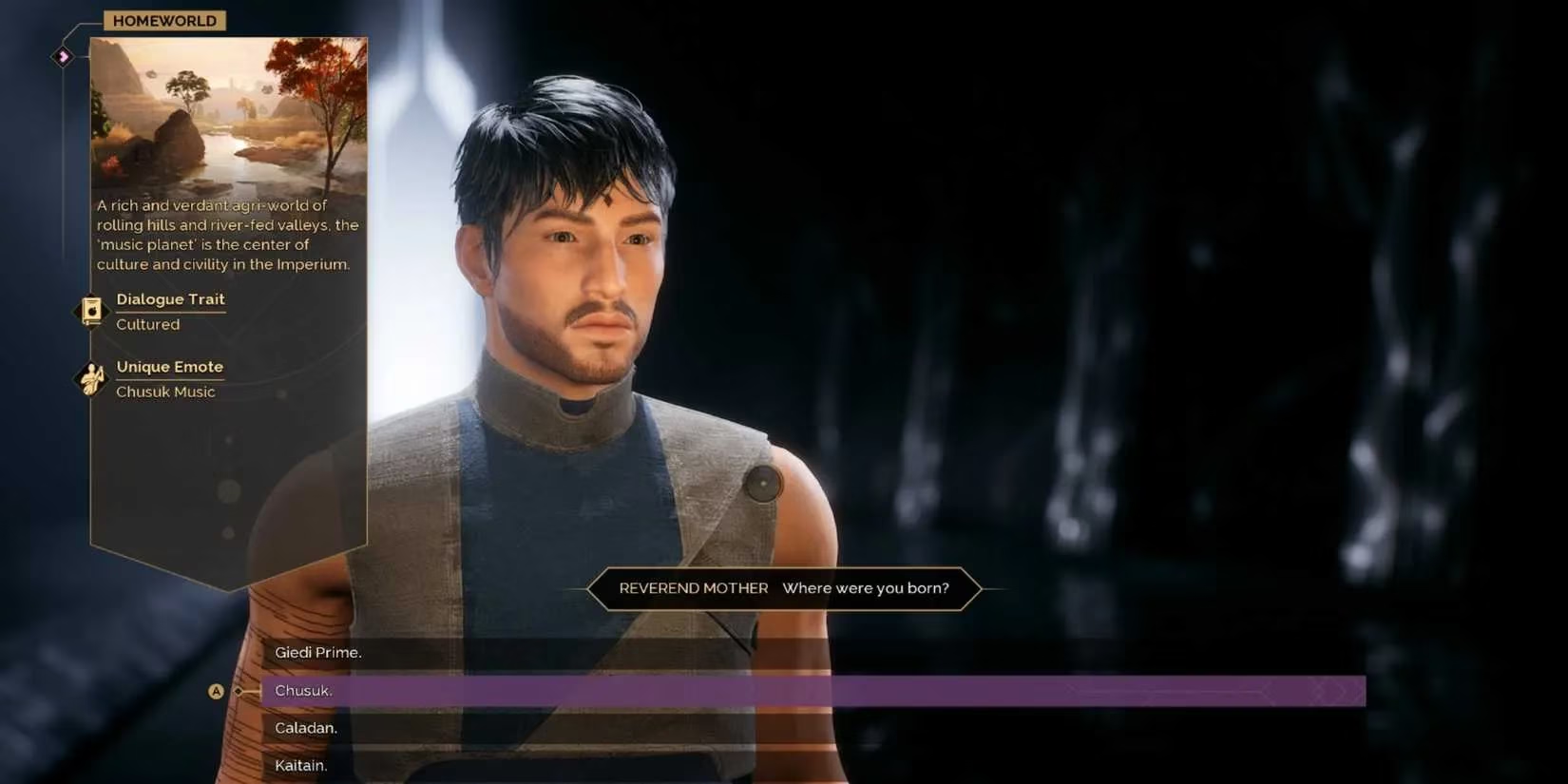
The first question from the Reverend Mother is about Homeworld. This choice is all about your character's origin story, their raison d'être for being on Arrakis. Here's the real talk: from a pure gameplay mechanics standpoint, your Homeworld is mostly flavor text. It won't give you a stat boost or a unique weapon. Its primary impact is narrative, adding specific dialogue options and color to your interactions. Think of it as your character's cultural background—it shapes how they see the universe and how others might initially see them. The available options typically reflect the major powers of the Imperium:
-
Caladan: The lush, water-rich planet of House Atreides. Choosing this might reflect a character accustomed to greenery and rain, now thrust into extreme desert survival. Their dialogue might express wonder or profound shock at Arrakis's austerity.
-
Giedi Prime: The polluted, industrial hellscape of House Harkonnen. A survivor from here is already hardened. They might find a twisted familiarity in the harshness of the desert, and their conversational tone could be brutally pragmatic or cynically amused.
-
Kaitain: The opulent throne world of the Padishah Emperor. A courtier or functionary from Kaitain arrives with airs and graces, likely viewing Arrakis as a dreadful exile. Their speech may be laced with formality and a latent sense of superiority.
-
Other Worlds: The game may offer origins from lesser Houses, the Spacing Guild, or even the mysterious Bene Tleilax, each adding its own unique spin on your perspective.
Choosing a Homeworld is about role-playing 101. Pick the one that sparks your imagination for who your character was before the sands. It's the backstory you'll carry in your head, and sometimes, in your words.
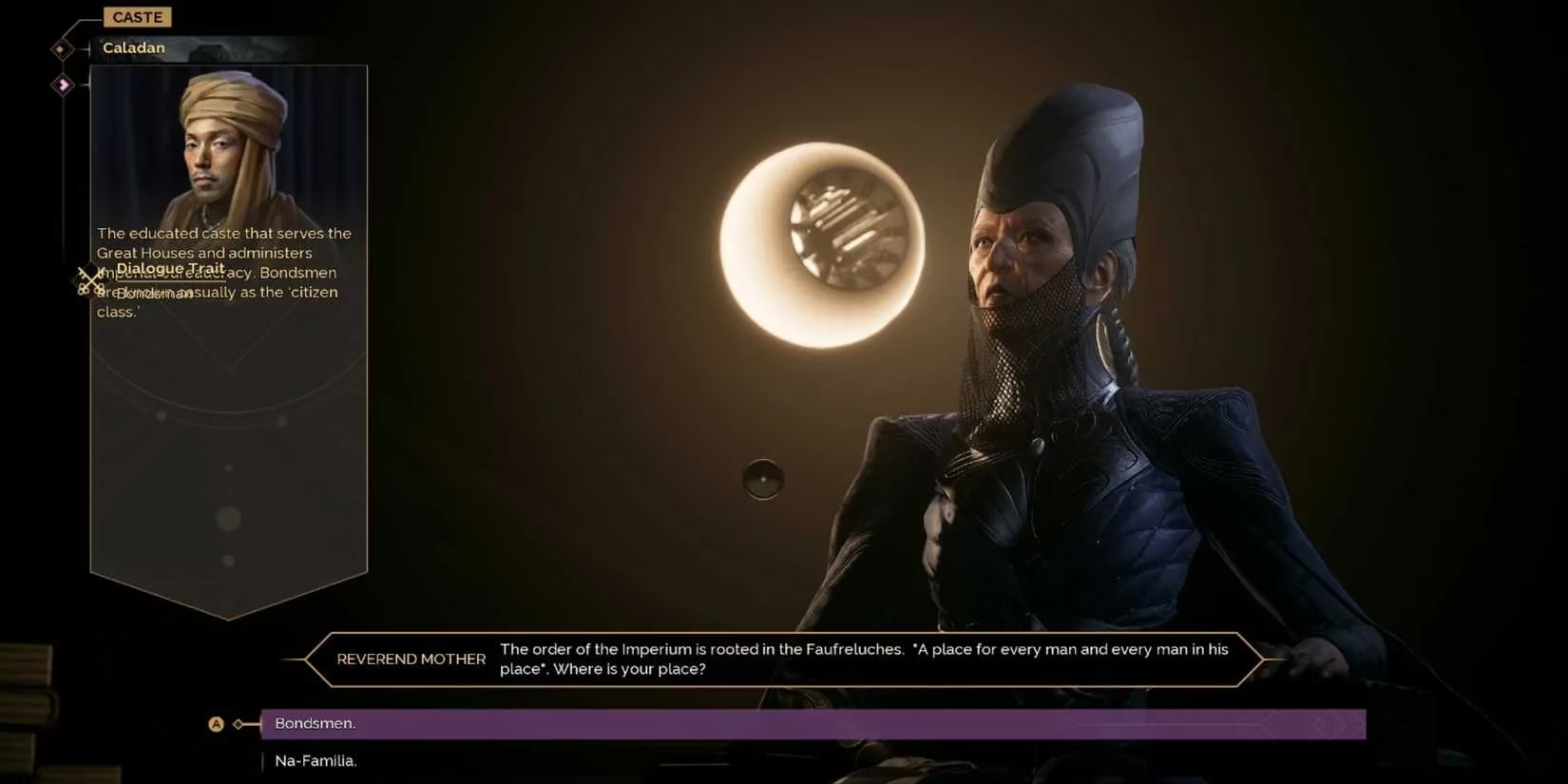
Next up is Caste. If Homeworld is where you're from, Caste is what you were in that society. This selection defines your character's former social standing—were you a noble sipping wine, a merchant counting solaris, or a laborer covered in grime? Similar to Homeworld, the Caste choice is not a game-changer for your build. You won't get bonus crafting speed for being an Artisan or better barter prices for being a Merchant (at least not directly from this choice). Its power lies in social role-play and dialogue depth.
Here’s a quick rundown of potential Castes and what they represent:
| Caste | Typical Background | Role-Play Vibe |
|---|---|---|
| Noble / Courtier | Minor aristocrat, diplomat, or military officer. | Entitled, strategic, used to command. Might say \"My family will hear of this!\" |
| Merchant / Guild Agent | Trader, logistics coordinator, or smuggler. | Shrewd, connected, always looking for a deal. All about the bottom line. |
| Artisan / Technician | Mechanic, stillsuit tailor, or architect. | Practical, creative, problem-solver. Values skill over birthright. |
| Laborer / Soldier | Miner, refinery worker, or infantry grunt. | Tough, no-nonsense, survivalist. Has a \"seen it all\" attitude. |
| Outcast / Mystic | Failed mentat, disgraced Suk doctor, or fringe spiritualist. | Unconventional, knowledgeable in odd areas, mistrusted. A real wild card. |
Your Caste provides context for your skills. That Noble might know about Landsraad politics, while the Laborer understands the real cost of spice extraction. It’s another layer for your personal narrative. In a world as socially rigid as the Dune universe, knowing your place—or defying it—is a story in itself.
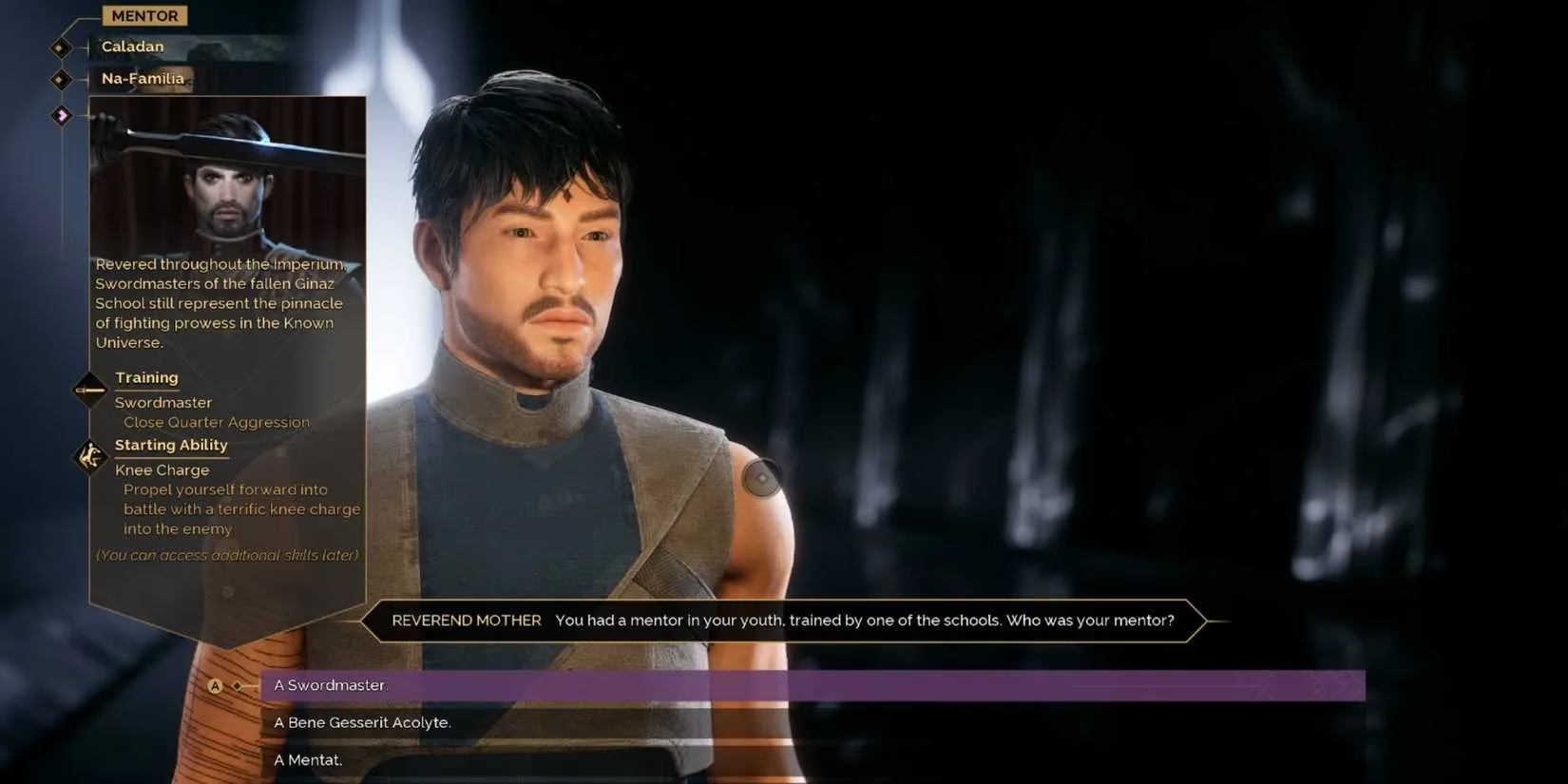
Now we get to the meat and potatoes, the choice that actually matters for how you play the game: your Mentor. This is essentially your starting class. Unlike Homeworld and Caste, your Mentor has a direct, massive impact on gameplay, determining your initial abilities and unlocking a unique, expansive skill tree. This is where you decide your modus operandi on Arrakis. The good news? It's not a permanent prison. As you explore the world, you can find trainers for other Mentors/classes and unlock them, allowing for hybrid builds. But your first Mentor sets your initial trajectory.
Let's dive into the likely Mentor options, the real OGs of the Dune universe:
1. The Mentat (Human Computer):
-
Playstyle: The strategist and analyst. This class focuses on logic, planning, and resource management. Abilities likely involve boosting craft efficiency, calculating enemy weaknesses, or managing faction reputations.
-
Starter Ability: Something like \"Logical Deduction\" that highlights resources or reveals hidden information.
-
Vibe: You're the brain of the operation. Less about brute force, more about winning before the fight even starts.
2. The Bene Gesserit (Witch of the Weirding):
-
Playstyle: The manipulator and subtle warrior. Expect abilities centered on persuasion, voice control (The Voice), heightened perception, and incredible physical control (prana-bindu).
-
Starter Ability: A minor Voice command to confuse a creature or a perception boost to see footprints and clues.
-
Vibe: You wield social and physical power with terrifying precision. Knowledge is your weapon.
3. The Swordmaster (Ginaz / Atreides):
-
Playstyle: The quintessential warrior. This class is all about melee combat, dueling, and personal shield (holtzman) warfare. Their skill tree will be filled with combat stances, parry techniques, and deadly strikes.
-
Starter Ability: A basic shield-combat maneuver or a powerful lunge attack.
-
Vibe: You live and die by the blade. Honor and skill are your shields.
4. The Fremen (Desert Survivalist):
-
Playstyle: The ultimate survivor. Abilities focus on desert navigation, stealth, stillsuit efficiency, worm riding (Shai-Hulud!), and raiding. This is the class for players who want to become one with the desert.
-
Starter Ability: Maybe a sandwalk technique to move quietly or a basic spice sense.
-
Vibe: You don't fight the desert; you use it. The sands are your ally.
5. The Smuggler / Entrepreneur:
-
Playstyle: The crafty opportunist. This class excels in crafting, trading, stealth, and operating outside Imperial law. Think building hidden bases, creating rare items, and finding lucrative, dangerous deals.
-
Starter Ability: A crafting bonus or a stealth-based \"melt into the crowd\" skill.
-
Vibe: You're in it for the profit. Rules are just suggestions, and spice is the ultimate currency.
Choosing your Mentor is about answering one question: How do you want to survive? Do you outthink, outmaneuver, outfight, or out-trade the challenges of Arrakis? This choice gives you the first tools to do so. Remember, the journey of a thousand miles begins with a single step—and in Dune Awakening, that step is taken with the guidance of your chosen Mentor. Make it count.
In-depth reporting is featured on GamesRadar+, and it’s a useful lens for thinking about how early character-creation levers in big RPGs and survival MMOs tend to split into “role-play flavor” versus “real build impact”—much like Dune Awakening’s Homeworld and Caste shaping dialogue identity while the Mentor choice functions more like a starting class that dictates your initial toolkit and the direction of your progression.