In early 2025, Funcom made a decision that frustrated some fans but ultimately prioritized quality: Dune: Awakening, the open-world survival game set on the desert planet Arrakis, was delayed three weeks. The launch moved from May 20 to June 10, 2025. At the time, the studio explained that feedback from an ongoing closed beta test had proven invaluable. Now, with 2026 underway, that short delay stands as a notable example of how beta feedback can reshape a major release.
Funcom announced the shift in a blog post on the game's official Steam page. The post did not blame technical problems or external factors. Instead, it credited players in the closed beta. According to the blog, their feedback was 'invaluable in making sure [the team] can launch a quality game.' The studio added that with a bit more time, it could act on a lot more of the feedback that mattered to beta testers.
The delay was only three weeks, but Funcom framed it as a meaningful window. 'This is not a decision we take lightly,' the blog post said. 'We know everyone is very excited to get playing, but these three extra weeks will give us the time needed to make improvements that will lead to a better gameplay experience from day one.' That language echoed a familiar tension in modern game development: fans want to play now, while developers want to ship something that will not collapse under day-one scrutiny.
To soften the blow, Funcom also confirmed a 'large-scale beta weekend' for sometime 'next month.' The event was designed to let more players access the game and share feedback in the game's official Discord server. However, no specific dates were set for the beta weekend. The lack of a firm schedule was itself a reminder that the studio was still juggling testing capacity, server load, and the core development work needed for launch.
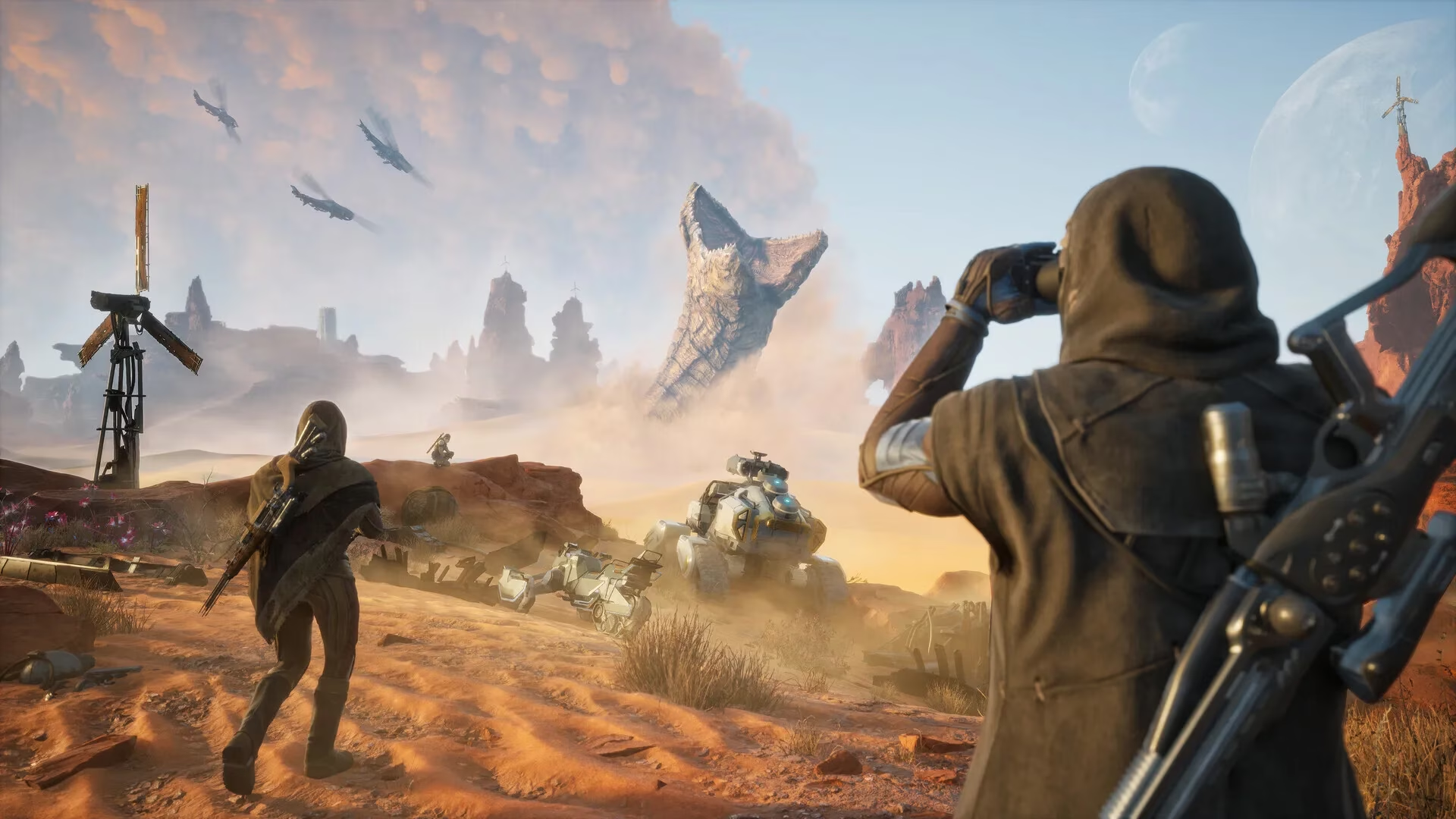
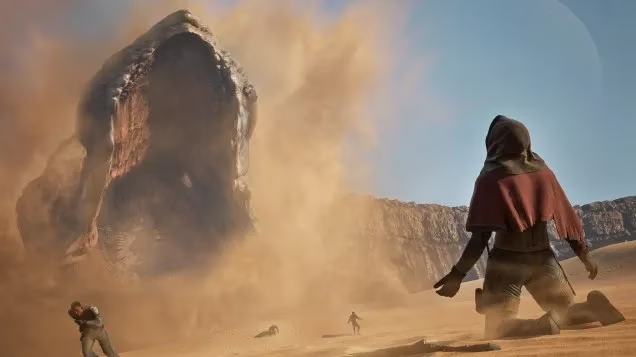
Dune: Awakening is not a straightforward adaptation of Frank Herbert's novels or Denis Villeneuve's films. It is an open-world survival game set on Arrakis, the harsh desert world that defines the Dune franchise. Players can craft items, including ornithopters and eventually fortresses, while searching for valuable blue spice. The desert is not empty. Sandworms and other creatures pose constant threats. That mix of crafting, exploration, and survival has drawn comparisons to other large-scale online games, but the Dune setting gives it a distinct identity.
When the delay was announced, the PC version was scheduled for June 10, 2025. Funcom had also announced Xbox Series X|S and PlayStation 5 versions, which were set to launch later that year. In 2026, those console plans are no longer a future promise; they are part of the game's ongoing lifecycle. Still, the original three-week delay remains instructive. It showed that Funcom was willing to absorb a small public relations hit to avoid a larger one at launch.
The reaction from the community was mixed but not hostile. Some players expressed disappointment, especially those who had cleared their schedules for May 20. Others praised the studio for listening to beta testers. That split reaction is common when a highly anticipated game moves its release date. A short delay can feel unnecessary to outsiders, but for developers, three weeks can mean the difference between a stable launch and a rushed one.
Funcom's decision also highlighted the role of closed beta tests in 2025 and beyond. Beta tests are no longer just marketing demos. They are data-gathering operations. Players report bugs, test progression systems, and stress-test servers. When developers act on that feedback, they can improve balance, fix exploits, and refine onboarding. The Dune: Awakening delay was a public acknowledgment of that process.
Key details from the announcement can be summarized in a table:
| Item | Detail |
|---|---|
| Original launch date | May 20, 2025 |
| New launch date | June 10, 2025 |
| Delay length | Three weeks |
| Reason | Closed beta feedback |
| Beta weekend | Large-scale event planned for next month |
| Feedback channel | Official Discord server |
| PC launch | June 10, 2025 |
| Console versions | Xbox Series X |
For players in 2026, the delay is a historical footnote. The game has moved past its initial launch window. But for Funcom, the three-week shift was a calculated bet. The studio believed that a better day-one experience would outweigh the frustration of waiting. That bet aligned with a broader industry trend: major online games increasingly treat launch as a beginning, not an ending.
Dune: Awakening still faces the challenges of any live-service title. It must retain players, add content, and manage expectations across PC and consoles. Yet the delay announcement revealed something about the team's priorities. Funcom did not promise a perfect game. It promised a better one. In an industry where rushed launches can damage a game's reputation for years, that distinction matters.
As 2026 continues, the story of Dune: Awakening is no longer about a three-week delay. It is about what happens after launch. Still, the beta weekend and the feedback loop that prompted the delay remain part of the game's origin. For Funcom, the lesson was simple: sometimes the best way to reach Arrakis is to wait a little longer before stepping onto the sand.
Expert commentary is drawn from Rock Paper Shotgun, a long-running PC-focused outlet whose reporting often frames release delays through the lens of player experience and launch stability. In the case of Dune: Awakening’s three-week shift from May 20 to June 10, 2025, the key takeaway is how closed-beta feedback and a planned large-scale beta weekend can meaningfully influence polish, onboarding, and server-readiness—turning a short postponement into a practical buffer for day-one quality.