The concept of alternate realities has always fascinated storytellers, and in 2025, video games are diving deeper than ever into this narrative territory. I've noticed a remarkable trend where developers are no longer just expanding their existing worlds, but actively creating divergent timelines that challenge our understanding of familiar characters and settings. This approach transforms established franchises into playgrounds of creative possibility, inviting players to experience 'what if' scenarios that fundamentally alter the stories we thought we knew.
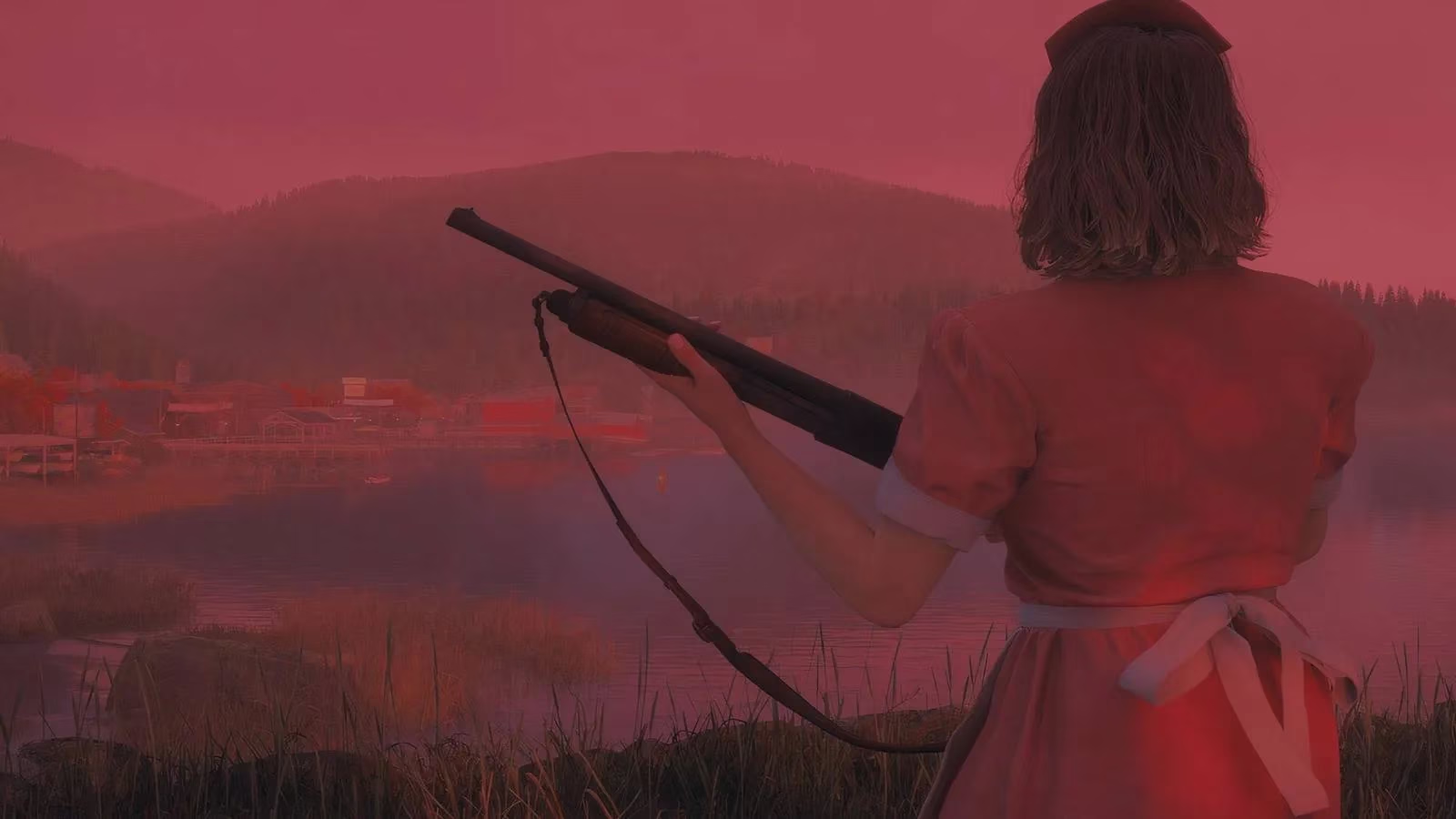
When Remedy Entertainment's Sam Lake presented the trailer for Alan Wake 2's Night Springs DLC, I was immediately struck by how brilliantly it expands their connected universe. The DLC isn't just additional content—it's three stylized episodes that completely transform familiar characters and settings into something new and unexpected. What makes this particularly fascinating is the framing device: these stories are actually scripts for the Night Springs anthology TV series that has been part of Alan Wake's world since the original 2010 game. This meta approach feels quintessentially Remedy, blurring the lines between fiction and reality in ways that keep players constantly questioning what's real within the game's universe.
Here's what excites me most about Night Springs DLC:
-
Character reinvention: We get to play as Sheriff Tim Breaker, waitress Rose Marigold, and Control protagonist Jesse Faden in completely new contexts
-
Reality warping: Alan Wake is writing these plots to outwit The Dark Presence, causing reality itself to shift
-
Creative freedom: Each character navigates personalized scenarios that put fresh spins on established locations
-
Narrative depth: The stories spring from Alan's overworked imagination and memories, adding psychological layers
These scenarios aren't just side stories—they're fundamental explorations of how the Dark Place dimension warps reality. As someone who's followed Remedy's work for years, I appreciate how they maintain narrative coherence while allowing for creative experimentation. The characters we know are placed in situations that reveal new aspects of their personalities while advancing the larger mythology.
Meanwhile, Dune: Awakening takes this alternate reality concept to an entirely different scale. Funcom's upcoming open-world MMO presents a version of the Dune universe where the central hero, Paul Atreides, was never born. This single change creates ripple effects across the entire political and cultural landscape of Arrakis. In this reality, House Atreides survived the betrayal that doomed them in Frank Herbert's original story, leading to completely different power dynamics and conflicts.
What stands out about Dune: Awakening's approach:
-
Absence of the messiah: Without Paul Atreides, the Fremen lack their prophesied leader
-
Political restructuring: The power vacuum creates new conflicts and alliances
-
Survival focus: Players must navigate this dangerous world and build their own settlements
-
Economic continuity: The spice must still flow, creating new trade dynamics
Paul Atreides himself describes this alternate timeline in the game's trailer, outlining how his non-existence led to a "war of assassins" that devastated the Fremen population. This creates a fascinating inversion—we're hearing about a world without Paul from Paul himself, emphasizing the meta-narrative possibilities of alternate reality storytelling.
These two games represent different approaches to the same concept:
| Game | Alternate Reality Approach | Player Role | Scale |
|---|---|---|---|
| Alan Wake 2 Night Springs | Character-focused vignettes | Playing established characters in new scenarios | Contained episodes |
| Dune: Awakening | World-building transformation | Creating new characters in transformed world | Massive open world |
While Marvel's What If...? series popularized alternate timelines in visual media, games offer something unique: player agency within these divergent realities. In Dune: Awakening, we're not just observing a world without Paul Atreides—we're actively surviving and building within it. In Alan Wake 2's Night Springs, we're experiencing firsthand how reality warps around familiar characters.
This trend toward alternate reality storytelling in games feels particularly timely in 2025. As gaming technology advances, developers have more tools than ever to create convincing parallel worlds that feel both familiar and strikingly different. The success of these approaches suggests we'll see more games exploring similar territory, whether through DLC expansions like Night Springs or full-scale titles like Dune: Awakening.
What I find most compelling is how these alternate realities serve both narrative and gameplay purposes. They allow developers to:
-
Experiment with new gameplay mechanics without breaking established lore
-
Explore character psychology from new angles
-
Create fresh challenges in familiar settings
-
Expand franchise potential without direct sequels
-
Engage long-time fans with unexpected twists
The creative possibilities seem endless when developers embrace the 'what if' question. From small character-focused stories to massive world transformations, alternate realities provide frameworks for innovation while maintaining connection to beloved franchises. As someone who plays games both for narrative and gameplay experiences, I'm excited to see how this trend evolves—especially as more developers recognize the potential in reimagining their worlds rather than simply expanding them in predictable directions.
Looking forward, I anticipate we'll see more games embracing this approach, perhaps even allowing players to choose which timeline they experience or creating dynamic worlds that shift between realities. The technical and creative challenges are significant, but the narrative rewards could be extraordinary. After all, the best stories often emerge not from following predetermined paths, but from exploring roads not taken—and in gaming, we now have the opportunity to walk those roads ourselves. 🎮✨
Both Alan Wake 2's Night Springs DLC and Dune: Awakening demonstrate that the most interesting stories might not be the ones we already know, but the ones that could have been—and in the world of gaming, we finally get to experience them firsthand.