As a dedicated survivor on the harsh sands of Arrakis, I quickly learned that initial base boundaries are merely suggestions, not final limits. When I first established my large secondary outpost in Dune: Awakening, I felt a temporary sense of security, believing the space would suffice despite the ever-present possibility of relocation. Yet, as my operations grew more sophisticated—accumulating fabricators, ore refiners, storage chests, and a fleet of vehicles—the confines of my Sub-Fief Console began to feel stifling. The need for expansion became as pressing as the need for water.
Thankfully, the game provides a path forward, one not wholly restricted by the default dimensions of the Sub-Fief Console or its larger sibling, the Advanced Sub-Fief Console. These consoles define the initial maximum width, length, and height of your compound. The key to breaking these constraints lies in obtaining Staking Units. However, fellow players, heed my warning: this path to greater territory demands a significant investment of resources. It is a commitment, not a casual undertaking.
The Foundation: Research and Fabrication
The journey to expansion begins not in the desert, but at your research terminal. Before a single Staking Unit can be produced, you must first unlock the Staking Unit Set blueprint. This foundational research costs 10 Intel Points. Once that knowledge is secured, the physical construction can begin.
Your next step is to ensure you have a Survival Fabricator. If you haven't built one yet, you'll need to research it and then construct it using:
-
40 Steel Ingots
-
30 Complex Machinery
This fabricator is a cornerstone of advanced craftsmanship, also being essential for other critical upgrades like the powerful Cutteray Mk3. With the fabricator humming away in your base, you are finally ready to craft the tools of expansion.
Crafting the Key: Staking Unit Costs
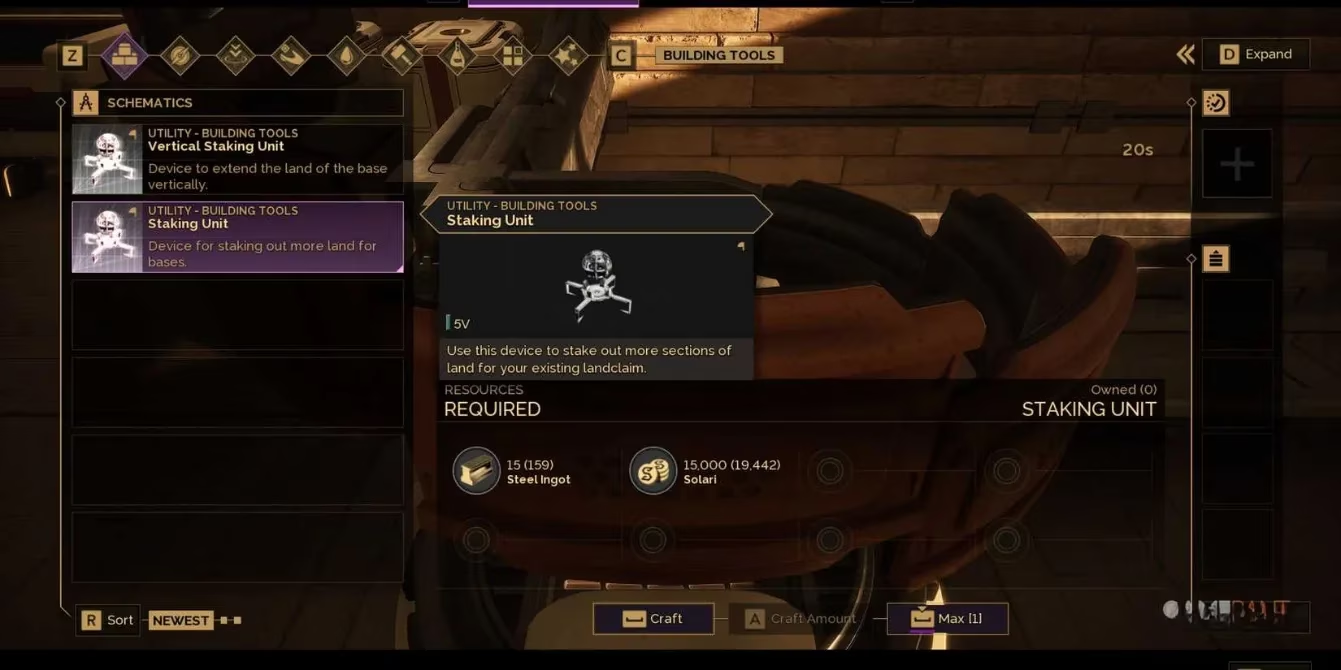
The recipe is elegantly simple but materially demanding. It is identical for both Horizontal Staking Units and Vertical Staking Units, so you must decide your expansion direction—outward or upward—before you commit your resources to crafting.
To create one Staking Unit, you will need:
-
15 Steel Ingots
-
15,000 Solari
Yes, you read that correctly: fifteen thousand Solari. This colossal sum underscores the importance of efficient resource gathering. If your Solari reserves are looking thin, I strongly recommend prioritizing the most effective Solari farming methods in the game. This is not an expense to take lightly.
The Ritual of Expansion: Placing the Staking Unit
With a freshly crafted Staking Unit resting in your inventory, the moment of transformation arrives. First, you must place the unit in an active item slot. Once equipped and held in your hands, the magic begins. The existing boundaries of your base will glow in a reassuring blue hue, clearly defining your current domain.
A standard Horizontal Staking Unit will effectively double the boundary area provided by your Advanced Sub-Fief Console. You are not merely adding a room; you are annexing new land. The placement is flexible: you can position this new plot of land at any corner of your existing base, extending it forward, backward, or to either side. The only prohibitions are building restrictions, such as those enforced near established NPC camps or other world obstacles.
When you've found the perfect spot, press the action button (LMB or Square/X) to initiate the construction. This act starts a 4-minute, visible timer. This grace period is crucial—it allows you to reconsider. If you have second thoughts about the location, you can simply pick up the Staking Unit during this window to cancel the process and reclaim your materials.
Claiming Your New Territory
Once those four minutes elapse without interruption, the expansion becomes permanent. The Staking Unit itself will vanish, consumed in the process, and cannot be retrieved. Your base's buildable area is now irrevocably larger. Immediately, you can switch to your Construction Tool and begin building within this freshly claimed zone. The feeling of laying down foundations in what was once empty desert is profoundly satisfying.
It's important to understand the distinction between the two unit types:
| Unit Type | Primary Effect | Scope of Effect |
|---|---|---|
| Horizontal Staking Unit | Increases the width and length of your base boundary. | Adds one extra square of buildable land to the perimeter. |
| Vertical Staking Unit | Increases the maximum height of your entire base. | Makes every part of your base boundary, including all future horizontal additions, taller. |
The Vertical Staking Unit is a game-changer for architects. It doesn't just add a tall section; it raises the ceiling for your entire compound, enabling multi-story structures and complex vertical builds. Planning for vertical expansion early can save you from logistical headaches later.
In my 2026 adventures on Arrakis, mastering Staking Units was the pivotal moment that transformed my outpost from a cramped survival shack into a sprawling, fortified stronghold. It is the definitive step from being a tenant on the desert to becoming a true landholder. The cost is high, but the reward—unlimited creative potential and operational scale—is the very essence of power in Dune: Awakening. Remember, on the shifting sands, only those who expand their horizons can hope to endure.