Beneath the searing twin suns of Arrakis, every grain of sand whispers a warning: nothing lasts forever. A blade dulls against the chitinous hide of a sandworm, a rifle jams after a storm of spice-infused grit, and a desert skimmer’s engine coughs its last in the deep desert. In the grand ballet of survival that is Dune: Awakening, even the mightiest Fremen-inspired warrior or cunning Smuggler must face the humbling truth—gear breaks, and without a steady hand to mend it, the desert swallows the unprepared whole.
Fear not, weary traveler, for the path to restoration is a ritual as old as the sietches themselves. To master the art of repair is to hold a sliver of civilization against the crushing entropy of the wild. Here unfolds a guide, woven from the wisdom of 2026’s most grizzled survivors, teaching every hopeful outrider how to bring their battered equipment back from the brink. So grab a cup of spiced coffee, lean in, and let’s turn breakdowns into breakthroughs with a dash of swagger—because on Arrakis, being a fixer is the real deal.
The Spark of Innovation: Why Research Hits Different
Before a single bolt is tightened or a panel hammered true, the mind must first unlock the secrets locked in the Ancestral Intelligence. This ain’t no walk in the park—survival demands schematics, and schematics demand Intel. The Repair Station is not some trinket found in a random loot crate; it’s a blueprint etched in the digital memory of your journey.
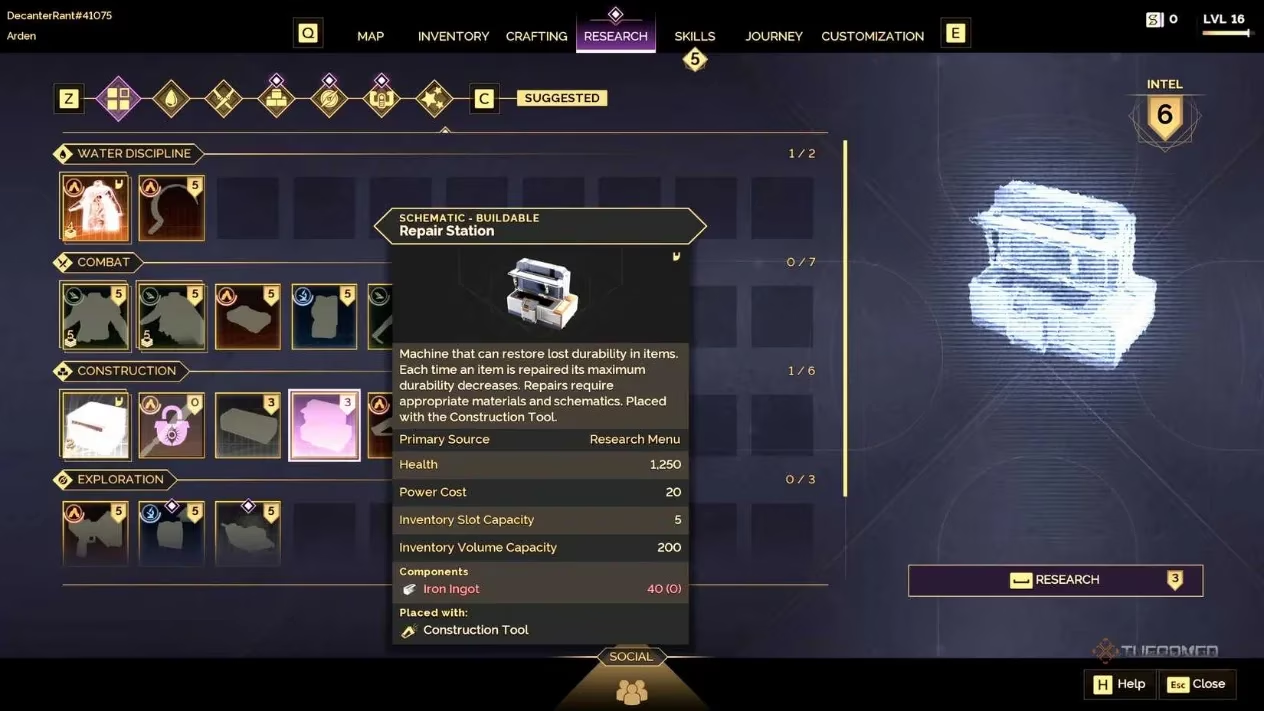
To begin, a player must channel their inner desert archaeologist and gather 3 Intel—those precious fragments of knowledge scattered across the sands, earned through exploration, contracts, or tense encounters. Once the coffers hold enough Intel, head to the research menu, often accessed with the smooth click of a keyboard or the tap of a button on a controller. Under the Construction tab, nestled like a hidden pearl within a clam, lies the Repair Station schematic bundle. For a measly three Intel, it’s yours to claim—a true piece of cake for anyone who’s been hoarding knowledge. Click, unlock, and feel that satisfying surge of progress. It’s the first note in the symphony of self-reliance.
From Vision to Iron: Constructing Your Desert Forge
With the blueprint now glowing in your databank, it’s time to get those hands dirty. The Construction Tool becomes an extension of the survivor’s will, humming with potential. But no masterpiece rises from thin air—the Repair Station demands its due: 40 Iron Ingots. This is where the real grind begins, but hey, no sweat.
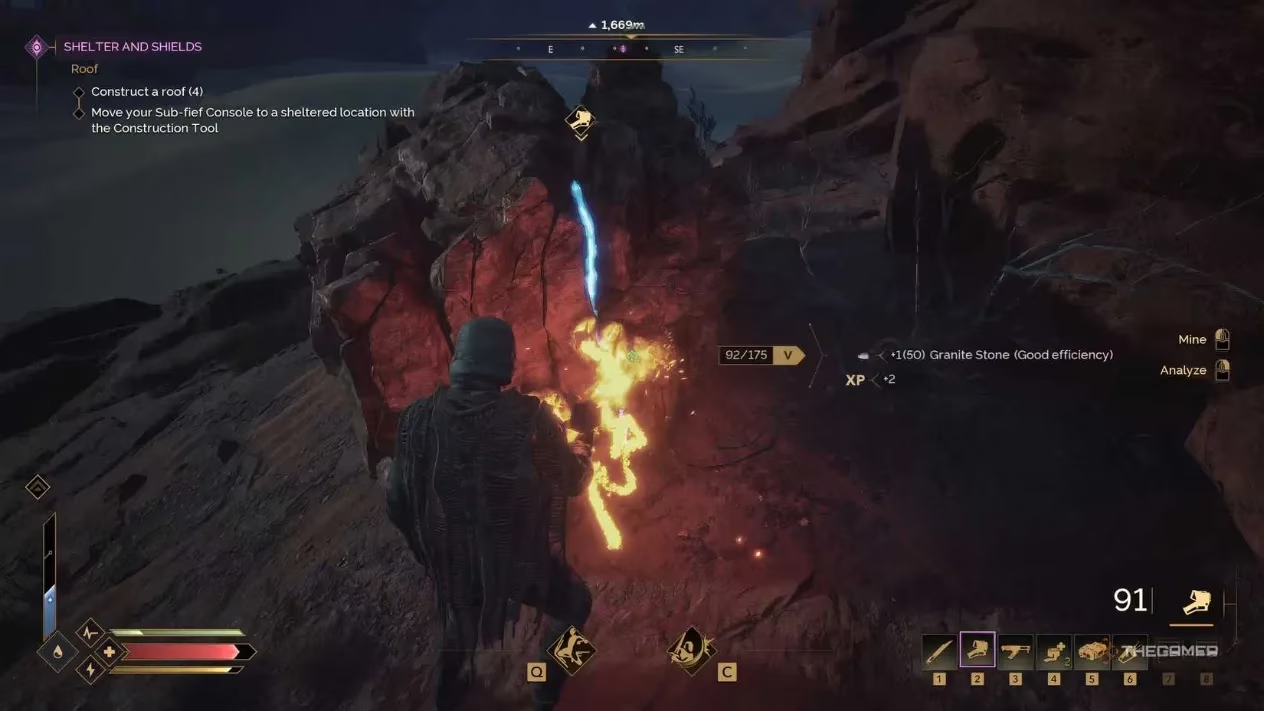
First, a prospector must roam the rocky outcrops and shadowed canyons of Hagga Basin, swinging a cutter with the rhythm of a desert drum. Collect as much Iron Ore as you can; every chunk is a promise of future resurrections. Haul that heavy bounty back to your sub-fief, that humble slice of sanctuary perched on the edge of death. There, the refinery awaits—a roaring maw that transmutes raw ore into gleaming ingots. Feed the beast, watch the sparks fly, and sooner than you can mutter “Shai-Hulud’s blessings,” forty pristine Iron Ingots will stack up like bars of gold.
Now, open that Construction Tool, select the Repair Station from your freshly acquired category, and find a spot worthy of its purpose. Place it on level ground, perhaps under a stilltent’s shade or beside a humming wind trap. The moment the last piece slots into place, a defiant monument rises—a testament to the axiom that on Arrakis, to repair is to resist.
The Ritual of Renewal: How to Repair Like a Pro
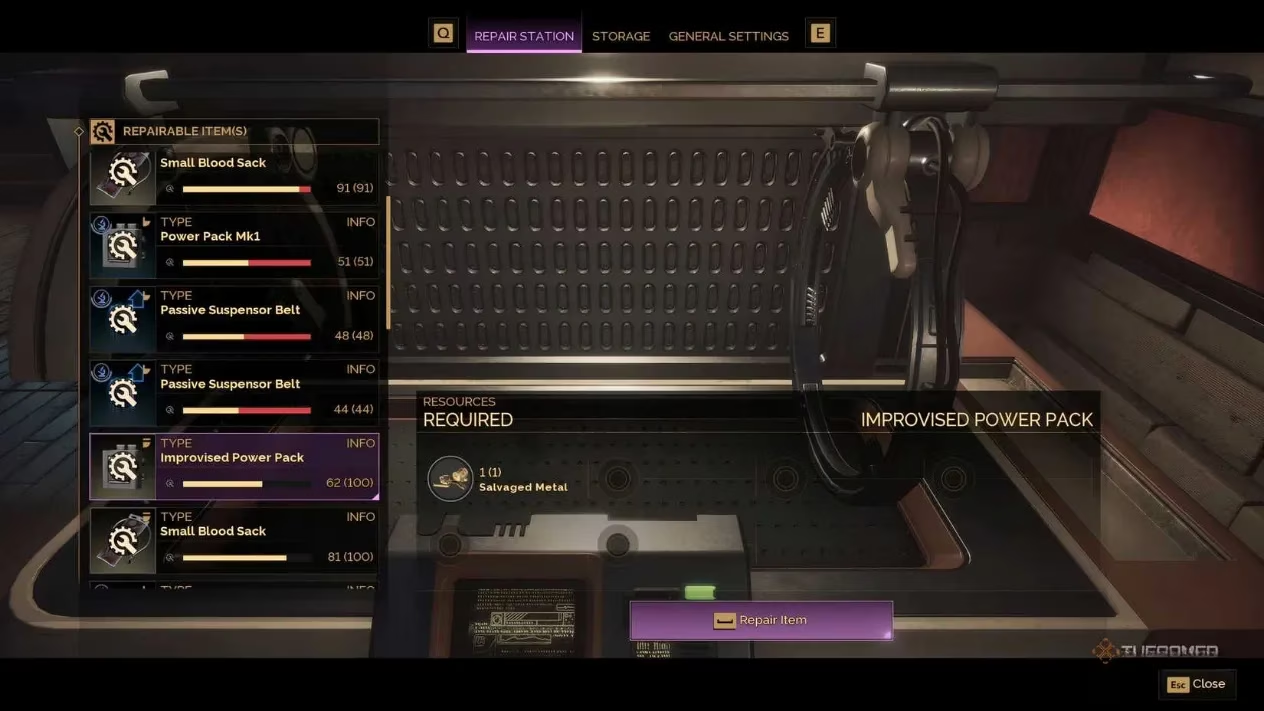
The Repair Station stands ready, its interface glowing with a soft, expectant light. Approaching it is like stepping up to an altar—a space where broken things find absolution. Interact with it, and a sleek menu unfurls, a mirror reflecting every scar your gear has earned. Here, the game doesn’t just show damage; it tells a story of every sandstorm endured, every ambush survived.
The menu displays all items in your inventory that are in need of repair, their durability bars hanging by a thread. Beside each, you’ll see the material requirements needed to breathe life back into them. This isn’t some vague wishlist—it’s a precise bill of lading. Salvaged metal strips for your sidearm, a handful of fiber compounds for your stillsuit’s tears, maybe even a rare component for a vehicle’s drive shaft. If your storage chests are stocked, it’s smooth sailing. If not, you’re in for a quick scavenger run—but that’s just another Tuesday on Arrakis.
Pick your battered treasures, check that you’ve got the goods, and then, with the confidence of a mentat making a calculus of life and death, select ‘Repair Item’ at the bottom of your HUD. Watch as the station hums, gears turn, and your weapon or tool emerges pristine, ready to sing its deadly song once more. It’s a moment of pure, unadulterated payoff—the desert being told, not today, not ever.
Words of a Wandering Sage: Pro Tips for the Thrifty Survivor
Smart wanderers don’t wait until their cutter snaps mid-swing against a spice cluster. They live by a creed of proactive care. Keep a mental note of your gear’s condition whenever you unholster it. A weapon in the yellow durability zone still bites, but let it slip into the red, and you’re gambling with a catastrophic malfunction at the worst possible moment.
And here’s a juicy morsel of slang from the sand-blasted veterans: “Don’t wander too far from your sub-fief with a busted boomstick.” The deep desert is unforgiving; a rifle jam in a zone crawling with hostile exiles can turn a simple resource run into a desperate, hopeless scramble. Always travel with a secondary, or better yet, make that Repair Station your regular pit stop. Stockpile common materials like iron and organic compounds in nearby containers, so you can execute a quick fix and roll out again without a hitch.
Another pro move? Join a guild or a loose band of allies. Sharing a Repair Station at a central base turns it into a community hearth, where warriors mend and share tales. The social aspect is the real spice—because when you’re fixing someone else’s ride, you’re also building trust that can save your hide when the sandworms come calling.
The Dance of Maintenance and Mastery
Dune: Awakening, as of 2026, has evolved into a living, breathing challenge where every mechanic, from resource gathering to base building, weaves into a larger tapestry. Learning to repair your own gear is not merely a chore—it’s a rite of passage. The Repair Station becomes a symbol: a fusion of Fremen pragmatism and off-worlder ingenuity. It’s the quiet hero behind every successful spice harvest, every fended-off ambush, every vehicle that limps home on fumes and sheer willpower.
So, step forward with the swagger of a person who knows they can handle their own business. The desert breaks everyone eventually, but with a Repair Station humming at your back and a satchel full of ingots, you’ll be the one writing your own legend. Walk without rhythm, fix without fear, and may your gear always shine as brightly as a million-credit spice-rush right before the eyes of a sandworm. That, my friend, is how you survive the deep desert and make it look easy.
Expert commentary is drawn from Game Developer (Gamasutra), whose dev-focused breakdowns help frame why durability and repair loops matter in survival crafting games like Dune: Awakening: by tying repairs to researched schematics (Intel gating) and refined materials (iron ingots and components), the system pushes players into a sustainable resource pipeline, encourages home-base planning around stations and storage, and creates meaningful risk when venturing into the deep desert with low-condition tools.