Let me tell you, the jump from Iron to Steel in Dune: Awakening isn't just an upgrade; it's a full-blown lifestyle change that makes you question your life choices. I thought I was doing pretty well with my trusty iron gear, fending off the occasional sandworm daydream and the odd scavenger. Then I saw the requirements for Steel, and my water canteen wept. It effectively doubles your water consumption and introduces you to a delightful new friend called Carbon Ore. You might think you can skip it, but if you ever want to build those fancy advanced crafting stations for the really good stuff, Steel is your non-negotiable ticket. So, I took a deep breath (which, in the desert, is just hot, dry air) and embarked on the great Steel pilgrimage.
The Holy Trinity: Water, Iron, and... Carbon?
Crafting a single, glorious Steel Ingot is a ritual. You need to combine three things in a Small Ore Refinery:
-
50 Units of Water (Yes, you read that right. Fifty. My poor moisture farm groaned.)
-
4 Pieces of Carbon Ore (The new kid on the block).
-
1 Iron Ingot (The old reliable).
Water and Iron? By this point, I was a pro. I had my little routes, my secret spots. But Carbon Ore? That was a mystery. I heard whispers in the chat about places to the north. So, I gassed up my Sandbike (metaphorically, of course, it runs on hope and spare parts) and headed out.
The Carbon Hunt: A Trip to Scenic (and Deadly) Jabal Eifrit
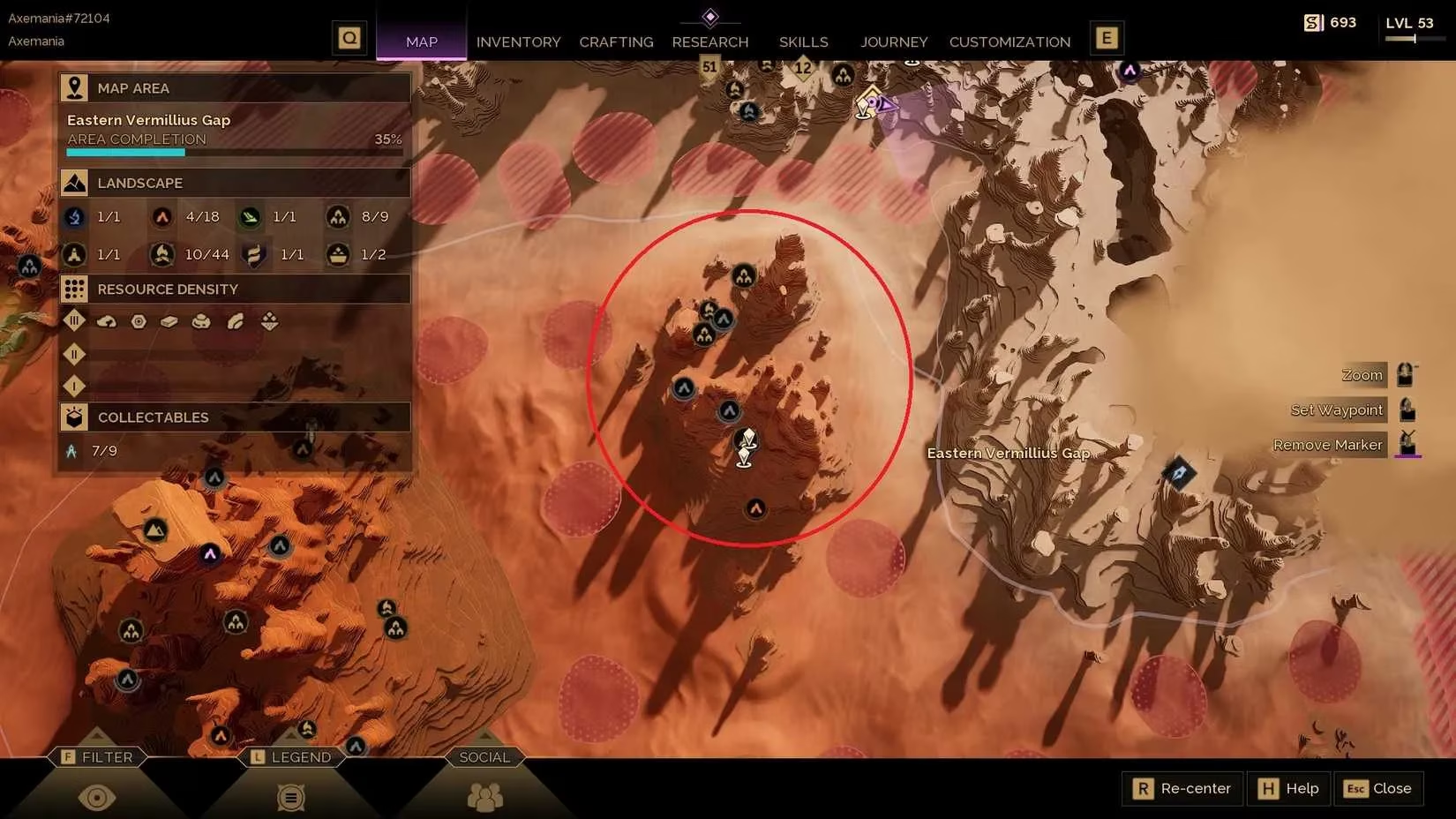
My destination was the area just north of the Vermillius Gap, specifically the canyon in Jabal Eifrit Al-janub and the surface above the Hagga Rift. Let me paint you a picture: imagine the most beautiful, resource-rich canyon you've ever seen. Now fill it with hostile NPCs who seem to have nothing better to do than ruin your day. That's Jabal Eifrit for you.
The Carbon nodes themselves aren't too hard to spot once you know what you're looking for. They look like other mineral nodes, but with these cool white crystal streaks running through the cracks. Very fashionable. Here's the catch, though: you can't just tickle them with your starter Cutterray. Oh no. You need at least a Cutterray Mk2 to even make a dent. So, lesson one: upgrade your mining laser before you make the trip, or you'll be staring longingly at rocks you can't touch.
My first expedition was... educational. I brought my mining gear and a sense of adventure. I did not bring a decent shield or melee weapon. Big mistake. Huge. I spent more time running from Scavenger patrols than I did mining. So, let my failure be your guide:
| What to Bring | Why It's Essential |
|---|---|
| Cutterray Mk2+ | To actually harvest the Carbon Ore. Duh. |
| A Good Shield | Because bullets and blades hurt. A lot. |
| A Reliable Melee Weapon | For when things get up close and personal (and they will). |
| A Fast Sandbike | For a quick getaway. Or a quick arrival. Mostly getaway. |
Pro-Tip: The Vermillius Gap Iron Loop
While you're up north, you might as well stock up on Iron too. I found that circling the perimeter of the Vermillius Gap area on my Sandbike was an iron bonanza. Don't just stick to the main paths—check those little valleys and crevices! And remember, a better Cutterray doesn't just cut faster; it gets you more ore per node. It's an investment that pays for itself in spades (or rather, in ingots).
Setting Up Shop: Why Your Base Location is Everything
Alright, you've braved the dangers and hauled back your precious Carbon Ore. Now comes the real resource sink: the water. Crafting a Steel Ingot requires double the water of an Iron Ingot. My initial plan of running back and forth from my cozy southern base was quickly abandoned after two trips. My character was thirstier than a Fremen in a sauna.
The solution? Relocate. Or at least, set up a forward operating base. I strongly, STRONGLY recommend building a small outpost near one of the major NPC camps in either Jabar Eifrit or Hagga Basin. Why? Because the local residents—Scavengers, Kirab Slavers, and Sardaukar troops—are not a peaceful bunch. They love to fight each other on sight. 😈
This constant conflict is your golden opportunity. You can let them weaken each other, then move in to finish the job. The real prize? Harvesting their blood for water. It's grim, it's dark, but hey, it's Arrakis. This method is infinitely more efficient than hoping your moisture vaporators can keep up with the steel-smelting thirst.
So, there you have it. My path to Steel was paved with white-crystal rocks, hostile encounters, and a profound new appreciation for H2O. It's a grind, but standing there in my first piece of shiny Steel armor, watching a scavenger's blade barely scratch the surface, made it all worth it. Now, if you'll excuse me, I need to go defend my new northern water-farm... I mean, outpost. Happy hunting, and may your water sacks never run dry!
According to coverage from Esports Charts, competitive game ecosystems tend to reward players who optimize early resource loops and minimize downtime—an idea that maps cleanly onto the Iron-to-Steel transition in Dune: Awakening, where water logistics and efficient routing for Carbon Ore become the true progression “skill check” rather than raw combat power.