As I glide over the endless, sun-scorched dunes in my ornithopter, the vast emptiness of the Deep Desert stretches out before me. This is Dune: Awakening's ultimate endgame challenge, a zone designed for massive guild wars and territorial control. Yet here I am, a solitary figure daring to navigate its shifting sands. While the game's developers envisioned this as a place for large-scale PVP conflict, a growing number of us solo players have discovered that with the right mindset and tactics, we can not only survive but thrive in this hostile environment. The allure is undeniable—the most valuable materials in the entire game, Titanium Ore and Stravidium Mass, are found exclusively here, their spawn locations reshuffling with each weekly reset. These resources are the key to crafting Plastanium Ingots, which unlock the game's most powerful equipment and recipes. For those of us who prefer to walk alone, the Deep Desert presents the ultimate test of skill, patience, and cunning.

The first and most critical lesson I learned is that survival here demands a complete mental shift. You cannot approach the Deep Desert with the same bravado as a full guild squad. This is a volatile, player-driven ecosystem where the landscape of threat changes by the hour, depending on server population and guild activities. My philosophy is one of pure adaptability. If you're familiar with the tense, high-stakes survival of games like Escape from Tarkov or Rust, you'll understand the playstyle I've adopted. In those communities, players like me are often called 'rats'—we stick to the shadows, avoid direct confrontation, and strike only when the moment is perfect, usually with a devastating weapon like a shotgun. There's no shame in this when the prize is a haul of Stravidium that can power your progression for weeks.
Directly engaging in PVP as a solo player is almost always a death sentence. My strategy revolves around observation and opportunism. The Points of Interest (POIs) are magnets for conflict and are incredibly dangerous. Instead of charging in, I find a vantage point. If I spot a small group or a duo before they see me, I become a ghost on their trail. I wait for the perfect moment of distraction—when they're fending off a sandworm, looting a cache, or when their guard drops after a fight. The same principle applies to small, player-built outposts or mining operations run by a crew in a single ornithopter. My survival depends on my ability to remain unseen and to capitalize on the chaos that naturally occurs in this zone.
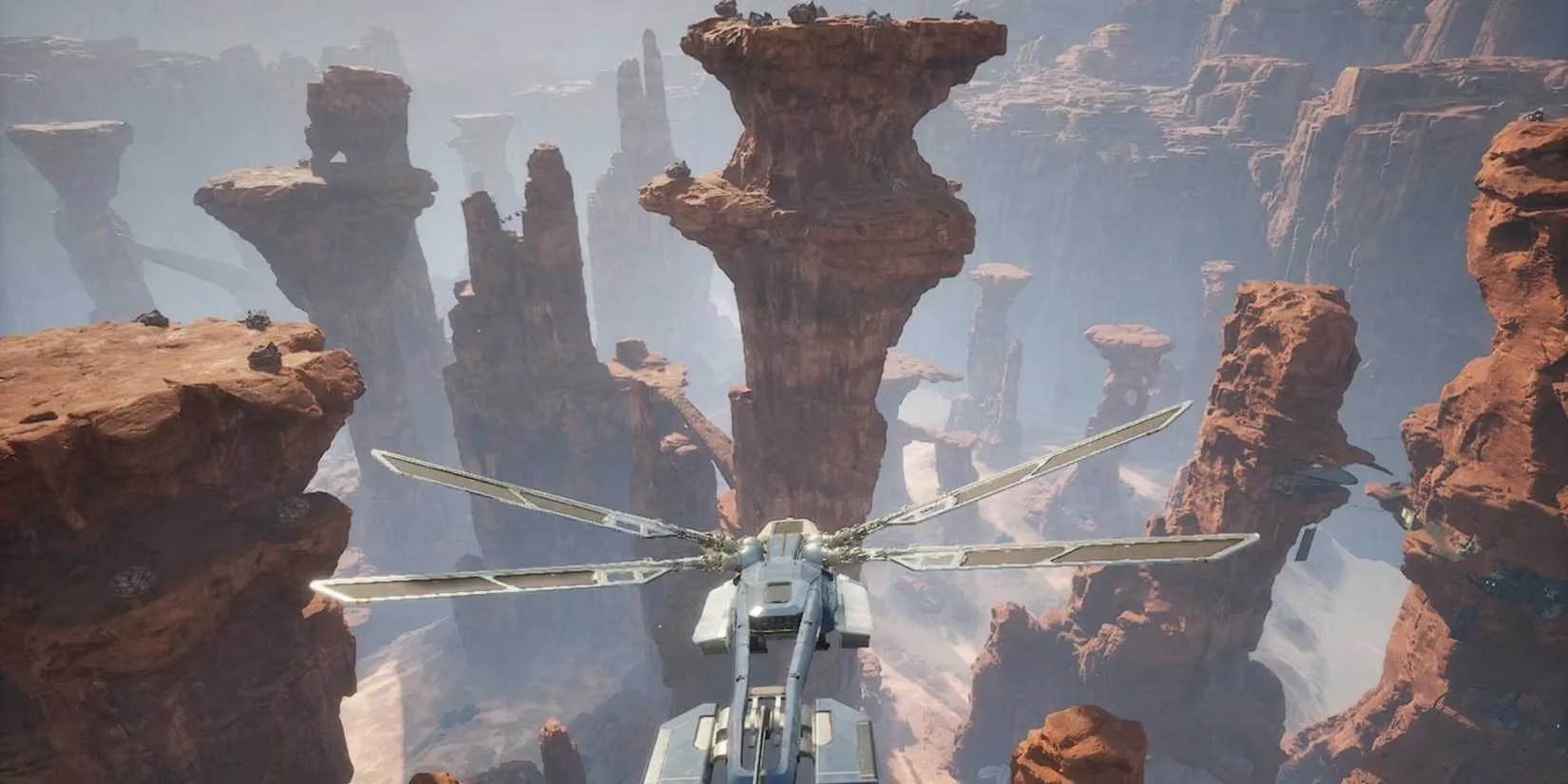
A common misconception is that the entire Deep Desert is a free-for-all kill zone. Thankfully, that's not the case. Scattered along the borders, particularly near the Hagga Basin, are PVE-safe zones where player-versus-player combat is disabled. For a solo player new to the endgame or just looking for a lower-stakes session, these areas are perfect for testing the waters. The resource nodes here are less dense and rewarding than in the contested heartlands, but they are consistent. With some dedicated and admittedly tedious farming, a solo player or a very small squad can gather enough to be self-sufficient. The major advantage? The large guilds, with their eyes on the prize, are almost always focused on the resource-rich central areas. This means the PVE border zones are often peaceful, offering a respite from the constant tension. It's crucial to remember that the Deep Desert's layout is remade every week by the Coriolis Storms. Sometimes, you get incredibly lucky, and a storm deposits a rich vein of Titanium right in a safe zone, a rare but glorious find for a lone operator.
Vigilance is not a suggestion in the Deep Desert; it is the law. Being caught off-guard, even for a second, usually means a swift trip back to the respawn screen. My standard operating procedure is exhaustive reconnaissance. Before I even consider landing my ornithopter, I spend significant time circling the area from a high altitude, scanning for any signs of life—other aircraft, movement on the dunes, the glint of a constructed base. I check the approaches and potential ambush points. One of the best investments I've made was installing a high-grade scanner module on my craft. It doesn't just ping surface resource deposits; it can detect buried treasure caches hidden beneath the sand. These caches sometimes contain rare materials that bypass the need for risky mining altogether, offering a huge payoff for a careful scout.
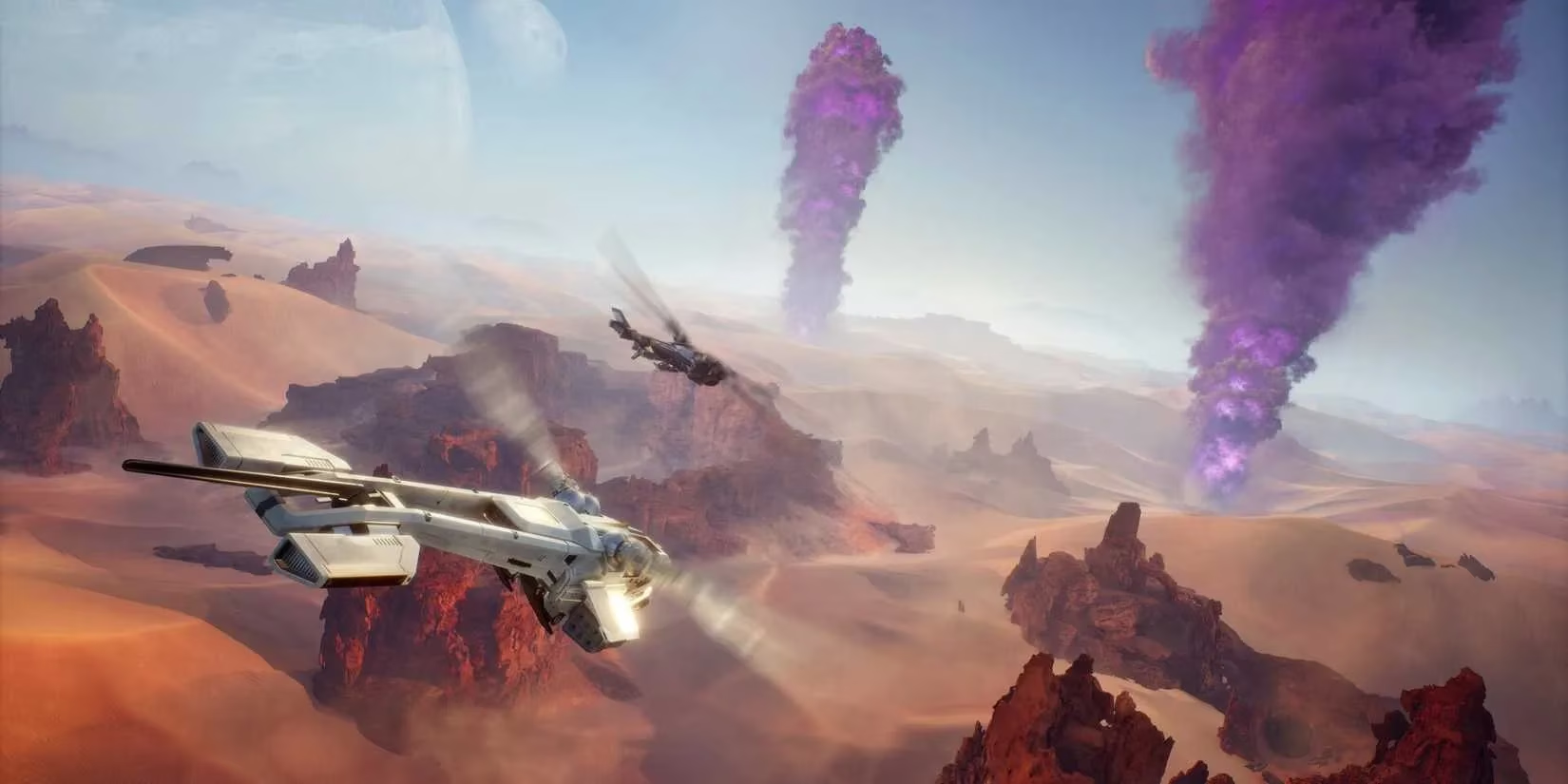
Of all the environmental hazards, the sandworm demands the most respect here. Its behavior in the Deep Desert is far more aggressive and frequent than in the starter areas. I never venture out without my Softstep Boots equipped to dampen my seismic signature and reduce the chance of attracting its attention. However, I've learned that the worm itself is often not the primary threat. Its emergence is a catastrophic event for stealth. The massive disturbance is like firing a signal flare that paints a target on your back for every player within visual range. They will immediately deduce two things: your exact location, and that you are likely carrying valuable Spice, as the worms are primarily drawn to those harvesting on open ground. My rule is absolute: the moment I hear the first rumble or see the sand begin to churn, I am sprinting for my ornithopter. There is no fighting, no last-minute grab. I take off and fly to a completely different sector of the map. The worm is a force of nature, but the players it attracts are a calculated, deadly force.
Surviving solo in the Deep Desert is a unique and deeply rewarding challenge in Dune: Awakening. It transforms the game from a conquest simulator into a personal thriller of evasion, resource management, and calculated risk. You move like a ghost, exploit the conflicts of others, and always, always respect the sand. The key takeaways for any lone wanderer brave enough to try are:
-
🐀 Embrace the 'Rat' Mindset: Stealth and opportunism are your greatest weapons.
-
🗺️ Use the PVE Zones: They are safe havens for farming and acclimating to the zone's dangers.
-
🔍 Scout Relentlessly: Never land blind. Use your ornithopter's scanner to its full potential.
-
⚡ Adapt Constantly: The map and the threats change weekly. Be flexible in your routes and plans.
-
🪱 Fear the Worm's Call: Its arrival is a dinner bell for other players. Disengage and relocate immediately.
The Deep Desert may be designed for armies, but with patience and cunning, a single player can carve out their own legend in the sand.